
True Detective and the Twelve-Year Evolution of an Anthology
## The Show That Was Supposed to End After Season One
True Detective premiered on HBO in January 2014 with eight episodes that landed like a comet. Nic Pizzolatto's swamp-gothic crime story, directed entirely by Cary Joji Fukunaga, starred Matthew McConaughey and Woody Harrelson as Louisiana state detectives investigating a series of ritual killings over seventeen years. The season was a near-instantaneous critical phenomenon. McConaughey's nihilist philosophizing as Rust Cohle became internet shorthand. The six-minute single-take tracking shot in episode four became a directing benchmark. The cosmic-horror references to Robert W. Chambers' The King in Yellow sent literary critics back to obscure 1890s short fiction.
The season ended with closure. Rust and Marty solved the case, survived their final confrontation, and the show closed on a quiet hospital conversation about light and darkness that gave Cohle's nihilism a small but real concession. The story was complete. There was no obvious place for the show to go from there.
HBO renewed it anyway. Season two, with new actors and a new setting, was the first attempt to test whether Pizzolatto's voice and structural approach could work outside its original swamp. The result, broadly considered one of the most disappointing follow-ups in prestige TV history, established that True Detective as an anthology was going to be a much harder proposition than the original season had suggested.
What Went Wrong in Season Two
The 2015 second season took the show to Vinci, a fictional industrial city in Southern California, with Colin Farrell, Rachel McAdams, Taylor Kitsch, and Vince Vaughn as four characters tangled in a municipal corruption case. The cast was strong on paper. The setting offered noir possibilities. Pizzolatto had freedom to write a different kind of story.
What went wrong was the writing. The plot was structurally overcomplicated, with too many characters whose connections to the central conspiracy were never clearly drawn. The dialogue, which had felt revelatory in season one as Cohle's voice, felt mannered and ponderous when spread across an ensemble of less metaphysically inclined characters. The mood was bleak without being earned. Critics turned on it quickly, and the show went into a hiatus that lasted nearly four years.
The season's failure exposed a structural problem with the True Detective project. Pizzolatto's strengths were specific. He wrote best when he had a single distinctive protagonist whose worldview could anchor the show, when the setting was a real geography he could evoke convincingly, when the case at the center had genuine cosmic-horror undertones. Season two had none of those. It was a noir without a face.
The Mahershala Ali Recovery
Season three arrived in 2019 with Mahershala Ali in the lead role as Detective Wayne Hays, investigating a 1980 child disappearance in the Arkansas Ozarks across three different timelines. The structural complexity worked this time because it served a thematic argument: the show was about how memory degrades, how cases linger across decades, how a single unsolved disappearance can shape an investigator's entire life.
Ali's performance is the season's anchor. He plays Hays across three ages — late thirties, fifties, and seventies — with the older Hays suffering from progressive dementia that increasingly destabilizes the timeline structure. The show makes us feel the slippage. Scenes shift between decades without warning. The same conversation appears in different lights. The structural device is high-difficulty, and Ali sells it through pure performance choice.
Season three was a genuine return to form. It didn't quite reach the cultural heat of season one — that was probably never possible again — but it proved that the anthology could work when the casting and writing matched its structural ambitions. Pizzolatto had recovered. The show seemed stabilized. And then HBO let nearly five years pass before bringing it back.
The Issa López Pivot
Night Country, the fourth season that premiered in January 2024, marked the first season of the show not written by Nic Pizzolatto. Mexican filmmaker Issa López, of the acclaimed Tigers Are Not Afraid, took over as showrunner with a story set in the fictional Alaskan town of Ennis during the polar night. Jodie Foster and Kali Reis led the cast as Chief Liz Danvers and Trooper Evangeline Navarro, two estranged former partners pulled back together by the disappearance of eight researchers at Tsalal Arctic Research Station.
The pivot from Pizzolatto's voice to López's was the most consequential creative decision the franchise had ever made. The two writers have fundamentally different sensibilities. Pizzolatto's True Detective was male-coded, philosophically dense, structured around long monologues, attentive to the metaphysical undertones of Southern landscape. López's True Detective is female-led, atmospherically driven, structured around silences and visual mood, attentive to Indigenous spiritual frameworks and environmental politics.
The fans were divided. Some viewers, particularly those most attached to Pizzolatto's worldbuilding and to season one specifically, felt that Night Country was True Detective in name only. Others, particularly those who had cooled on the franchise after seasons two and three, found López's version a welcome reframing. The show's critical reception was strong overall, with Jodie Foster winning her first Emmy and the season earning the franchise's strongest reviews since season one.
The Foster and Reis Pairing
What Night Country gets right is its central pairing. Foster's Danvers is a hard-edged, profanity-prone chief who has been ground down by both her job and by personal grief. Reis's Navarro is the trooper who refuses to let an old missing-persons case go. Their estrangement is the show's emotional spine, and López spends the season's six episodes carefully revealing the history that pulled them apart.
Reis, in particular, is a discovery. She came to acting after a professional boxing career and had only modest screen credits before being cast in the role. Her presence on screen is unusual in a way that makes her work as a character — she carries a physicality and a steadiness that no traditional television actor would have brought to the role. The choice to cast her opposite a four-decade Hollywood veteran like Foster is the season's most distinctive casting decision, and the chemistry between them is what makes the central case feel personal rather than procedural.
The supporting work is also strong. Finn Bennett as Pete Prior, the young officer caught between Danvers and his own father, has a small but cumulative arc that pays off across the finale. John Hawkes as Hank Prior, Pete's father, plays a kind of frustrated authority that the show treats with more sympathy than it might have. The ensemble is tighter than season two ever managed.
The Atmospheric Argument
Night Country's most distinctive achievement is its mood. López builds a long-form sense of unease through visual repetition: aurora borealis over white ice, frozen breath, the way light works differently when the sun does not rise. The show's atmospheric commitment is comparable to what Top of the Lake achieved in New Zealand or what Fortitude attempted in the Arctic, but tuned to a specifically Indigenous-influenced spiritual register that the franchise had not previously explored.
The supernatural undertones are handled with deliberate ambiguity. Is the Tsalal mystery a straightforward crime story with environmental and political dimensions? Or is something genuinely unknowable happening on the ice? The show leaves space for both readings. The finale's central reveal is grounded in human action, but the surrounding atmosphere — the ghosts, the visions, the unaddressed presences — refuses to be entirely explained away. López clearly admires the way season one held its cosmic-horror undertones in ambiguous register, and Night Country borrows that strategy.
Where the Franchise Goes Next
HBO has confirmed a fifth season with López returning as showrunner, with a different setting and new lead casting to be determined. The continuity she's establishing — a female-led, atmospherically driven, regionally specific anthology — is now the franchise's working model. Pizzolatto's involvement is unclear, and his absence from Night Country was the moment True Detective transitioned from being one writer's project to being a brand that could be passed between creative voices.
The franchise's twelve-year arc traces a recognizable pattern for prestige anthology television. A breakout first season. A failed second attempt. A recovery. A handoff to a new voice that reframes the project entirely. Each transition has redefined what the show can be, and the next season will redefine it again. What True Detective will mean in 2027 or 2030 is not a question its 2014 first season could have answered. The anthology format, when it works, is supposed to keep that question open.
The cumulative achievement of the franchise across these four very different seasons is also worth naming. Most American prestige anthology series have struggled to maintain quality across multiple iterations. American Horror Story's quality has varied wildly. American Crime Story has had high points and disappointments. The Sinner ran out of energy after a strong first season. True Detective's record — one classic, one disaster, one strong recovery, one successful handoff — is, on balance, better than the genre average. The franchise has proved that a single brand can survive complete creative reinvention as long as the core promise to the audience remains stable: a contained crime story, a strong central pairing, a regionally specific setting that takes its location seriously.
That core promise is what makes True Detective different from generic prestige procedural work. The show has never been about the case in the narrowest sense. It has always been about the place, the people who live there, the way that working a case in a particular geography changes the people who do the work. Whether the next season unfolds in another remote setting or in a city, whether it is written by López again or handed to another voice, that core promise is what audiences will be checking for. So far, four times out of four, the franchise has at least attempted to keep it.
Test Your Knowledge!
Think you know this topic? Take a quiz and find out.
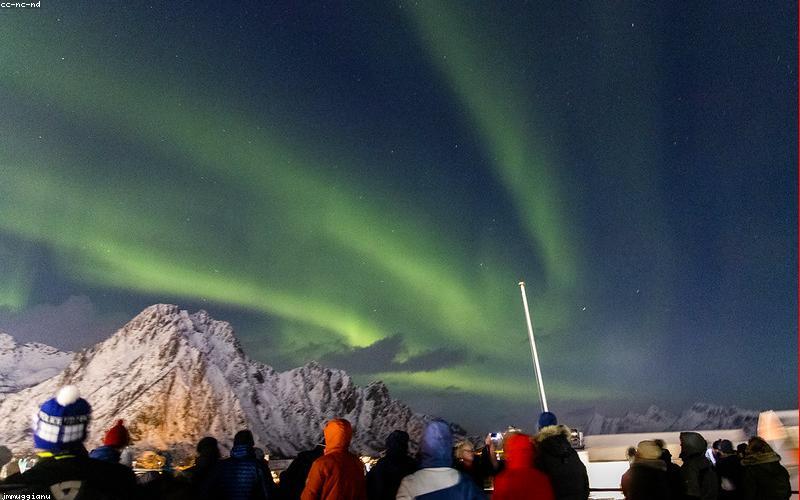
True Detective: Night Country Trivia (Season 4)
From Ennis to Tsalal Station, test your recall of Issa López's polar mystery starring Jodie Foster and Kali Reis.
Which Anti-Hero Archetype Fits You?
From the stoic operator to the wounded idealist, find out which prestige-TV anti-hero archetype your real personality actually matches.
Related Articles

The Anti-Hero Protagonist, From The Sopranos to Now
Twenty-five years after Tony Soprano sat down on his shrink's couch, the prestige anti-hero is still the dominant figure in American drama. The form has changed.

Fargo and the Craft of the Midwest Noir Anthology
Noah Hawley has now produced five seasons of Fargo across a decade, building one of the most consistent and underrated bodies of work in prestige TV.
PG-13 vs. R: How Rating Strategy Now Defines the Blockbuster
Deadpool & Wolverine, Joker, and the modern R-rated blockbuster era — and why the PG-13 default is finally being questioned at the studio level.