
PG-13 vs. R: How Rating Strategy Now Defines the Blockbuster
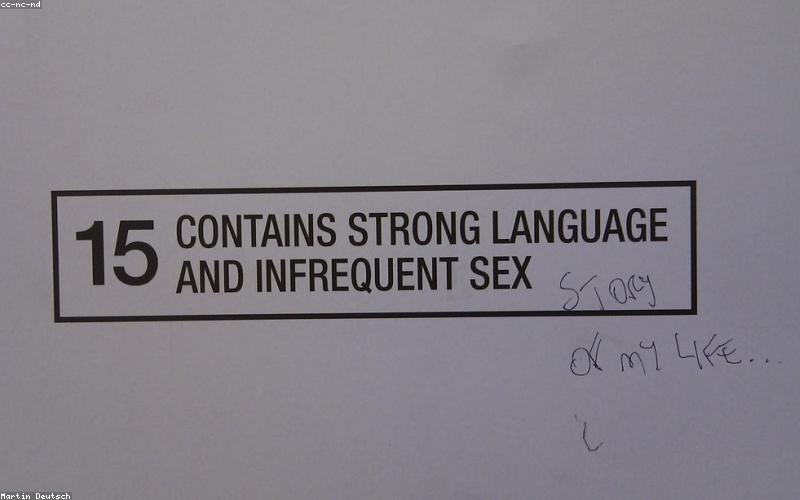
## The Rating That Defined a Generation
For roughly the past twenty-five years, the PG-13 rating has functioned as Hollywood's default blockbuster setting. The reasoning has been simple. PG-13 maximizes the addressable audience. It allows action, intensity, and some moderate language without alienating family viewers. It permits the international theatrical releases to clear most national censorship boards without modification. And it preserves the franchise's ability to extend into toy, theme park, and family-marketing deals that R ratings often foreclose.
The result has been a long stretch in which the biggest theatrical releases — the entire MCU, the vast majority of DC and Star Wars projects, all of Disney's live-action remakes, almost all of Pixar and Illumination's theatrical work, and most major animated and family event films — have lived inside the PG-13 ceiling. This has been so consistent that the rating has effectively become invisible. A Marvel film being PG-13 is not a creative choice in the way that an R-rated indie film's rating is a choice. It's a structural prerequisite.
This stable equilibrium has been under quiet pressure for several years, and it cracked open meaningfully in 2024. Deadpool & Wolverine became the highest-grossing R-rated film of all time at approximately $1.3 billion globally. Furiosa, released a month earlier, opened soft but earned strong reviews for its R-rated action setpieces. The Substance, released in September, became a major theatrical success with a deeply R-rated tone. Several upcoming projects — Blade, The Batman: Part II, a long-rumored R-rated Wolverine spinoff outside the MCU — are now being positioned to take advantage of the rating space that Deadpool & Wolverine reopened.
This is the most interesting strategic shift in blockbuster filmmaking since the Marvel Cinematic Universe model crystallized in 2008. The question is what changed, and what it means for the next decade of theatrical release strategy.
The Joker Precedent
The first significant data point in the modern R-rated blockbuster question was Joker (2019). Todd Phillips's character study, made on a $55 million budget, grossed over $1 billion globally and won Best Actor for Joaquin Phoenix at the Academy Awards. It became the first R-rated film to cross the billion-dollar mark. At the time, the industry response was cautious. Joker was treated as an outlier — a singular project with a specific creative position, an unusually risk-tolerant studio (Warner Bros.) backing a director who had built credit with The Hangover, and a marketable star at the center.
The cautious reading proved partially right. Joker did not immediately trigger a wave of R-rated blockbuster greenlights. The 2020 pandemic disrupted the theatrical calendar in ways that made any strategic shift difficult to evaluate. Joker: Folie à Deux, the 2024 sequel, underperformed significantly, complicating the legacy of the original. Studios watching the data could reasonably conclude that Joker had been a unique success rather than the start of a trend.
But the data was accumulating in the background. Joker's success was followed by It Chapter Two ($473 million), Bohemian Rhapsody at PG-13 with R-rated impulses ($910 million), and a series of moderately R-rated horror successes. The Deadpool films had been quietly making the case for nearly a decade — Deadpool (2016) at $782 million and Deadpool 2 (2018) at $785 million had demonstrated that the R-rated superhero film could work commercially, but the franchise was treated as an outlier rather than a model. The cumulative argument was that R-rated films could perform at scale, but the industry resisted updating the prevailing strategy.
Deadpool & Wolverine in 2024 forced the update. Crossing $1.3 billion with an R rating, while reaching a broader audience than the previous Deadpool films, demonstrated that the rating wasn't the cap on commercial performance that studio orthodoxy had assumed.
What Changed in the Audience
Part of what changed is the audience itself. The PG-13 default was built around assumptions about family theatrical attendance that were rooted in the 1990s and 2000s, when families with children were the dominant theatrical demographic. Those assumptions have eroded. Families with young children now do a significant portion of their film viewing through streaming. The theatrical audience that actually shows up has aged, and the age skew is real. Multiple industry research reports across 2023 and 2024 indicated that the median theatrical attendee was older than at any prior point in the modern era.
This older audience has different rating preferences than the assumed family demographic does. Older audiences are more comfortable with R-rated content, particularly R-rated content that has craft justification rather than gratuitous excess. They've grown up with R-rated films as legitimate cinematic releases — The Godfather, Pulp Fiction, Fight Club, The Departed, No Country for Old Men — and they don't read the rating as a barrier to attendance.
Younger audiences also engage with R-rated content differently than the orthodoxy assumed. Streaming platforms, social media, and adjacent media ecosystems expose younger viewers to mature content constantly. A teenage moviegoer in 2024 is not encountering R-rated material for the first time at the theater. The protective logic that made the PG-13 default seem like the safe commercial choice has been undermined by the broader media environment.
What this means in practice is that the addressable audience for an R-rated film is now closer to the addressable audience for a PG-13 film than the historical gap suggested. The films are not as commercially constrained by the rating as the studio's strategic assumptions implied.
The Marketing Reality
Marketing has also shifted. The PG-13 advantage used to be primarily about media buy efficiency — R-rated films couldn't run trailers on networks targeting younger viewers, couldn't run during family-friendly programming, and couldn't access the full reach that PG-13 films could. That advantage has eroded as media consumption has fragmented. Younger audiences spend most of their media attention on platforms that don't have the same restrictions that legacy broadcast and cable did. R-rated trailers can reach the target audience through YouTube, TikTok, Twitter, Instagram, and streaming-service ad inventory without losing reach.
The Deadpool & Wolverine marketing campaign demonstrated this. The film's trailers and promotional clips circulated widely on social media without the restrictions that would have hampered an R-rated film in the legacy broadcast era. Ryan Reynolds personally amplified the marketing through his social channels. The film became a cultural event before its release without depending on traditional family-friendly media buys.
There's also a counterintuitive marketing advantage that the R rating now provides. In a theatrical market where most major releases are PG-13, the R rating itself becomes a differentiator. It signals that the film is doing something the standard franchise extension isn't doing. It promises something more intense, more grown-up, more committed to its tonal premise. The rating has become a marketing asset rather than a marketing liability, especially for properties whose audience read the PG-13 ceiling as a compromise rather than a default.
The International Question
The R-rated blockbuster has one durable disadvantage that the PG-13 model doesn't share. International theatrical markets, especially China, often impose additional restrictions on R-rated content. The Chinese theatrical market is sufficiently large that some R-rated American films have been effectively excluded from it, and the lost revenue has historically been a major argument against the R-rated approach for tentpole releases.
This argument has weakened as Hollywood's relationship with the Chinese market has deteriorated. Several recent American films, including PG-13 ones, have been quietly excluded from Chinese release for unrelated political reasons. Studios have stopped relying on Chinese theatrical revenue as a reliable contributor to blockbuster economics. The R-rated penalty in China matters less when the China revenue has become unreliable across all ratings.
Deadpool & Wolverine specifically did not release in China and still cleared $1.3 billion globally. That data point has been studied carefully inside the industry. It suggests that the rest of the international market — particularly Europe, Latin America, Japan, and South Korea — can absorb enough R-rated demand to make the films work without relying on Chinese theatrical revenue. This is a significant strategic shift, and it removes one of the structural pressures that kept the PG-13 default in place.
What This Means for the Next Decade
The most likely outcome of the current moment is not that R-rated blockbusters will replace PG-13 blockbusters. The PG-13 model still works for properties that benefit from family-broad audiences and the marketing reach that comes with them. Inside Out 2 and Wicked are not going to be R-rated. The animated theatrical market, the family franchise market, and the Marvel core continuity will continue to operate inside the PG-13 ceiling.
What's changing is that R-rated blockbusters are no longer treated as a category exception. They're being greenlit as a parallel strategic track. Studios are explicitly developing R-rated projects in genres — horror, comic-book adaptations, action thrillers, character studies — where the rating fits the material. The result will be a more rating-diverse theatrical calendar than the past decade has produced.
This is generally good for the medium. The PG-13 ceiling had forced creative compromises on projects that would have benefited from R-rated freedom — particularly horror and adult-skewing comic book films. The opening of the R-rated path means filmmakers can match the rating to the project rather than the project to the rating. That's a healthier creative dynamic, and it's one the industry has been quietly building toward for years.
The era of the universal PG-13 default is ending. The era of strategic rating choice is beginning. Wade Wilson would tell you he started it. He'd be mostly right.
Test Your Knowledge!
Think you know this topic? Take a quiz and find out.

Deadpool & Wolverine Trivia: The R-Rated MCU Experiment
Test your knowledge of the 2024 team-up — from Hugh Jackman's return to the TVA cameos to the box-office records the R-rated film set.

What's Your Cinema Experience Style?
Are you an IMAX purist, a 35mm loyalist, a streaming-first viewer, or a social moviegoer? Find out how you actually like to watch.
Related Articles

Deadpool & Wolverine: The R-Rated MCU Experiment That Worked
How Shawn Levy, Ryan Reynolds, and Hugh Jackman engineered the first R-rated film in the MCU into the highest-grossing R-rated movie of all time.
The Legacy Sequel: Why Hollywood Keeps Returning to Decades-Old Franchises
From Top Gun: Maverick to Beetlejuice Beetlejuice to Twisters, the legacy sequel has become Hollywood's most reliable theatrical model — and its most overused one.

Theatrical Experience vs. Streaming: The 2024 State of the Debate
After Inside Out 2, Deadpool & Wolverine, Wicked, and Twisters, the case for theatrical exhibition looks different than it did during the pandemic. So does the case for streaming.