How Streaming Changed Music Forever

## The End of the Album Era
For most of the twentieth century, music was sold in discrete packages. A vinyl LP, a cassette, a compact disc—each represented a deliberate artistic statement, sequenced and priced as a single object. Streaming dismantled that economy in less than a decade. When Spotify launched in 2008 and gained global traction by the mid-2010s, the album stopped being the primary unit of consumption. Instead, the song—and increasingly, the snippet—became king. Drake's "Scorpion" in 2018 famously stuffed twenty-five tracks onto a single release, gaming playlist economics by giving listeners more opportunities to stream individual cuts. The strategy worked, but it also signaled how thoroughly platforms had rewritten the rules.
The Playlist as Tastemaker
Radio DJs once held enormous power to break a song. Today, that influence has shifted to a handful of editorial curators at Spotify, Apple Music, Amazon Music, and YouTube Music. A spot on "Today's Top Hits," "RapCaviar," or "New Music Friday" can transform an unknown artist into a household name overnight. Lil Nas X's "Old Town Road" exploded partly because the song landed on country, hip-hop, and pop playlists simultaneously, blurring genre lines in ways radio formats traditionally resisted. Even more powerful are algorithmic playlists like Discover Weekly and Daily Mix, which use listening behavior to surface songs no human curator chose. The result is a strange paradox: discovery feels more personalized than ever, but the songs that win are often optimized for that very algorithm.
Shorter Songs, Front-Loaded Hooks
Streaming services pay artists only when a listener crosses the thirty-second mark on a track, which has measurably altered how songs are written. Average pop song lengths have dropped from over four minutes in the late 1990s to roughly three minutes today. Intros have shortened or disappeared entirely. The chorus often arrives within the first fifteen seconds. Tracks like Olivia Rodrigo's "drivers license" or Doja Cat's "Say So" front-load their most memorable melodies because skipping is now as easy as flicking a thumb. Producers talk openly about the "TikTok hook"—a moment crafted to be looped fifteen seconds at a time. Whether you consider this a creative constraint or a creative death, the math is undeniable: short, sticky, immediate songs perform best.
Globalization and the Death of Borders
Before streaming, regional music scenes mostly stayed regional. Reggaeton dominated Latin America, K-pop ruled South Korea, and Afrobeats simmered in West Africa, but breaking into the United States or United Kingdom required label muscle and translated marketing. Streaming flattened those barriers. Bad Bunny became the world's most-streamed artist for three consecutive years without releasing a single English-language album. BTS sold out stadiums in São Paulo and São Francisco with lyrics primarily in Korean. Burna Boy, Rema, and Tems carried Afrobeats to the top of the Billboard Hot 100. Listeners proved more open to language and rhythm differences than the industry assumed, and platforms happily served whatever drove engagement. The "global hit" is no longer a Western export—it's an actual exchange.
The Economics: Who Actually Gets Paid
The most contentious legacy of streaming is the question of money. Per-stream payouts vary by platform but generally hover between $0.003 and $0.005. To earn the equivalent of one $10 album sale, an artist needs roughly two thousand to three thousand streams. For superstars like Taylor Swift, Bad Bunny, or The Weeknd, the volume is enormous and the income substantial. For mid-tier or indie artists, the math is brutal. Songwriters, who historically earned mechanical royalties on every CD sold, have seen their income decline most sharply. The 2023 push by Universal Music Group to demonetize tracks under a thousand annual streams was one response, but it primarily punished smaller artists. New models—direct-to-fan subscriptions, Bandcamp, Patreon—have grown in part because streaming alone rarely pays a livable wage outside the top one percent.
Catalog Becomes the Crown Jewel
Streaming also turned old songs into financial gold. Because catalog tracks—anything more than eighteen months old—continue earning passive revenue indefinitely, investors have spent billions buying the rights to legacy songwriters' work. Bob Dylan sold his publishing to Universal for an estimated $300 million. Bruce Springsteen reportedly received $500 million from Sony. Stevie Nicks, Justin Bieber, Sting, and Neil Young have all completed similar deals. Investors view a hit song as a long-duration bond: predictable, low-volatility income for decades. The phenomenon has even revived old songs through TikTok virality, as Fleetwood Mac's "Dreams" famously experienced in 2020 thanks to a skateboarder drinking cranberry juice.
What Listeners Gained and Lost
For consumers, streaming delivered the greatest jukebox in human history at the price of a couple of lattes per month. Virtually every recorded song from every era is one search away. That abundance, however, comes with a cost: ownership. Your library is a license, not a possession. Songs can vanish when rights holders disagree, as Neil Young and Joni Mitchell demonstrated when they pulled their catalogs from Spotify in 2022. The intimacy of building a music collection—browsing record stores, sequencing mixtapes, reading liner notes—has been replaced by infinite scroll and autoplay. Many fans are pushing back, which helps explain the resurgence of vinyl, cassette revivals, and a fresh appetite for physical media that streaming once seemed poised to bury.
The Next Phase
Streaming is no longer the disruptor; it is the establishment. The next wave of change is already arriving: AI-generated tracks competing for playlist spots, social-first releases that prioritize TikTok and Reels before traditional platforms, and direct artist platforms that bypass middlemen entirely. Whether the industry continues to consolidate around a few mega-platforms or fractures into countless micro-communities remains an open question. What is certain is that the relationship between artist and listener—mediated for over a century by physical objects—has been permanently rewired by a stream.
Test Your Knowledge!
Think you know this topic? Take a quiz and find out.

What's Your Perfect Road Trip Playlist?
The open road needs the perfect soundtrack. Answer these questions to discover what kind of playlist matches your road trip energy.
The 90s Pop Quiz
Boy bands, girl power, and grunge anthems collided in the 90s. Test how much you actually remember from this golden era of pop.
Related Articles
The Evolution of Pop Music From the 2000s to Now
Trace pop music's wild journey from TRL-era anthems and ringtone rap to streaming-era genre blending, bedroom producers, and TikTok-driven hooks.
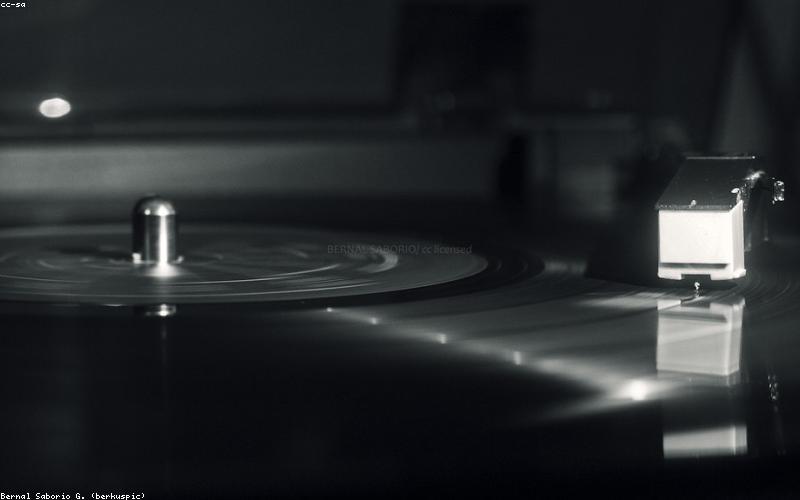
Why Vinyl Records Are Back and Outselling CDs Again
Explore the vinyl revival's deeper causes: tactile listening, album-as-art-object, Record Store Day, Taylor Swift variants, and the slow-listening backlash.
Indie Sleaze: Why the Late-2000s Aesthetic Came Back, and What It Means
The flash-photography party aesthetic of the late 2000s returned in the 2020s as a music and visual revival, reframed by a generation that never lived it the first time.