
The Twelve Houses of Astrology: A Working Guide to the Birth Chart's Geography

## The Map Beneath the Map
When most people think of astrology, they think of the twelve zodiac signs — Aries, Taurus, Gemini, and so on. The signs are real and matter, but they are only one of three layers in a Western birth chart. The other two are the planets (where they are at the moment of birth) and the houses (which divisions of the sky they occupy from the perspective of the place of birth).
The houses are the layer most beginners skip, and the layer most experienced astrologers will tell you is the most consequential. They are the geographical dimension of the chart. If the planets describe what is happening and the signs describe how it is happening, the houses describe where in your life it is happening — career, partnership, home, friendships, hidden inner life.
This article is a working guide to all twelve houses, what they govern, where they sit on the wheel, and how the major house systems differ. As with all astrological frameworks, the houses are best understood as an interpretive system for self-reflection — not a predictive tool, and certainly not a substitute for financial, medical, or legal advice.
The Geometry of the Wheel
The houses are derived from the daily rotation of the Earth, not the annual orbit. The basic idea is simple: at any moment, the celestial sphere is divided into twelve sectors by an observer's local horizon and meridian. The Ascendant — also called the rising sign — is the eastern horizon at the moment of birth, marking the boundary between the twelfth and first houses. Directly opposite, on the western horizon, is the Descendant, marking the boundary between the sixth and seventh.
The Midheaven (Medium Coeli, often abbreviated MC) is the highest point in the sky at birth, marking the cusp of the tenth house. Directly below, beneath the earth at the moment of birth, is the Imum Coeli (IC), the cusp of the fourth house.
These four points — Ascendant, Descendant, Midheaven, IC — are the angles of the chart. The four houses they begin (1, 4, 7, and 10) are called the angular houses and were considered, in classical astrology, the most influential. Houses 2, 5, 8, and 11 are succedent — they follow the angles. Houses 3, 6, 9, and 12 are cadent — they fall before the next angle.
A Brief History of How the Houses Came to Be
The twelve-house system is older than most of what we associate with modern Western astrology. It is broadly Hellenistic — that is, it emerged from the cross-pollination of Babylonian observational astronomy with Greek philosophy in the centuries after Alexander the Great's conquests, and was systematized in Greco-Roman Egypt around the first and second centuries CE. The astrologer Vettius Valens, writing in second-century Antioch, gave detailed accounts of the houses' meanings in a tradition that already felt established.
The Hellenistic astrologers worked primarily with Whole Sign houses, in which each house corresponded to one full zodiac sign starting from the Ascendant. This system spread eastward into the Persian and later the Islamic astrological traditions, where it was preserved through the medieval period when it had largely fallen out of use in Latin Europe. It also moved into the Indian subcontinent, where it remains the standard system of modern Vedic astrology.
The more complex quadrant-based house systems — Placidus, Koch, Regiomontanus — were innovations of medieval and early modern European mathematicians wrestling with the problem of how to subdivide the sky for high-latitude observers, where the equal-sign approach produced increasingly awkward results. Placidus's particular system, settling on time-based division of the diurnal arcs, won out in the print era largely because of the availability of Placidus's published house tables.
The twentieth-century revival of interest in older traditions, particularly through the work of Project Hindsight in the 1990s, brought Whole Sign houses back into wide circulation among English-speaking astrologers. Many modern readers now move comfortably between Placidus and Whole Sign, treating them as different lenses on the same chart.
The Twelve Houses, One by One
The first house begins at the Ascendant and is associated with self, body, vitality, and how you appear to others. Planets here color first impressions and shape what astrologers call the rising-sign expression — the version of you that walks into a room.
The second house concerns your relationship to material life — money, possessions, values, and what you take for granted as yours. Modern astrologers often emphasize the values dimension: not just what you own, but what you consider worth owning.
The third house governs the immediate environment of communication — siblings, neighbors, short trips, daily learning, the early-morning email, the chat with the person at the next desk. It is the house of how you process and exchange information.
The fourth house, anchored at the IC, is about home, family of origin, ancestral roots, and the private base from which you operate. Some traditional astrologers also link it to one's later life and final years.
The fifth house is creativity, romance, play, children, and self-expression — the part of life where you make things and have fun making them. It is sometimes called the house of personal joy.
The sixth house concerns daily work, routines, health, and service. Not your career — that is the tenth — but the rhythms of how you actually spend your days, your relationship to colleagues and to bodily care.
The seventh house, opposite the first and beginning at the Descendant, governs one-to-one partnerships: marriage, business partners, close collaborators, and open opponents. It is the house of significant other in the broadest sense.
The eighth house is the house of shared resources, deep transformation, intimacy, inheritance, and the kinds of change that involve loss and renewal. Modern astrologers often connect it to psychological depth.
The ninth house is the house of meaning — long-distance travel, higher education, philosophy, religion, foreign cultures, and the worldview you build over a lifetime. It is the wide-horizon house.
The tenth house, anchored at the Midheaven, is career, public reputation, vocation, and your role in the world's eyes. It is what you are known for, the thing your work life will say about you.
The eleventh house concerns friendships, networks, communities, hopes, and the social goals that align you with larger groups.
The twelfth house, the final house, is the most introspective: the unconscious, hidden patterns, retreat, solitude, what is behind the scenes, and that which lies beyond the visible. It can be described as the house of what is too close to see clearly.
House Systems: Why Two Astrologers Can Disagree
Here is where things get technical. The twelve-house framework is consistent across modern Western astrology, but the method of dividing the sky into twelve sectors is not. Different house systems give the same person different cusps — and sometimes different planets in different houses.
The Placidus system, devised by the Italian astronomer Placidus de Titis in the seventeenth century, divides the houses based on the time it takes a degree of the ecliptic to pass through a given quadrant. Placidus is the default in most modern English-language astrology software and is the system most contemporary readers learn first.
Whole Sign houses, by contrast, are the oldest known house system. They were used in Hellenistic astrology and remain standard in most Indian (Vedic) astrology. In Whole Sign, each house contains exactly one zodiac sign — beginning with the sign of the Ascendant. This system is structurally simpler and has gained ground among traditional astrologers in recent decades.
Other systems include Equal House (each house is exactly thirty degrees from the Ascendant), Koch (a refinement of Placidus), Regiomontanus (a fifteenth-century system), and Campanus (which divides the prime vertical). Each system answers a slightly different geometric question, and each gives a slightly different chart.
For a beginner, the practical implication is that you may want to view your chart in both Placidus and Whole Sign and notice where they agree and disagree. The angular houses (1, 4, 7, 10) tend to feel quite different in the two systems, and many readers find one resonates more clearly than the other.
Reading a Chart by the Houses
A useful first pass when looking at your chart is to ask which houses contain the most planets. These are the life areas that are most active, where the chart's energy is concentrated. Someone with a stellium (a cluster of three or more planets) in the second house will likely have a chart organized around values, resources, and embodied life. Someone with a stellium in the ninth will have a chart pulled toward meaning, travel, and the wide horizon.
Equally useful is to notice which houses are empty. Empty houses are not unimportant — they simply suggest life areas that are not where the chart's main story unfolds. The classical interpretation is that empty houses are governed primarily by the sign on their cusp and the planet that rules that sign.
Beyond that, the next layers — aspects between planets, transits across the houses, the lunar nodes' house placements — give astrologers material for years of careful work. The houses themselves, though, are the underlying geography. Without them, planets and signs float free with nowhere to land.
Houses as a Mirror, Not a Map of the Future
Astrology generally, and the house system specifically, is best read as a structured vocabulary for self-reflection. The houses give a useful set of categories — career, partnership, home, hidden life — that almost any person can use to think about where their attention is going and where it isn't. As with the broader astrological tradition, houses do not predict specific events, recommend financial decisions, or stand in for medical or legal advice.
What they can do is offer a contemplative frame. To say one has a strong twelfth house is not to receive a prophecy. It is to be invited to think about one's relationship to solitude, the unconscious, and what lies beyond ordinary visibility — and to notice whether one is honoring that part of life or running from it.
That is, in the end, what the twelve-house wheel offers. Not a forecast. A geography. A way of noticing where in your life things are actually happening, and where you might be neglecting the rooms.
Test Your Knowledge!
Think you know this topic? Take a quiz and find out.

Astrology Houses Deep Trivia: The Twelve Sectors of the Birth Chart
Test your knowledge of the twelve houses in Western astrology — what each governs, where they sit, and how house systems differ.

What Zodiac Sign Truly Matches Your Personality?
Your birth chart says one thing, but your personality may match a totally different sign. Take this 10-question quiz and find out which zodiac element best matches your vibe. Just for fun, of course.
Related Articles
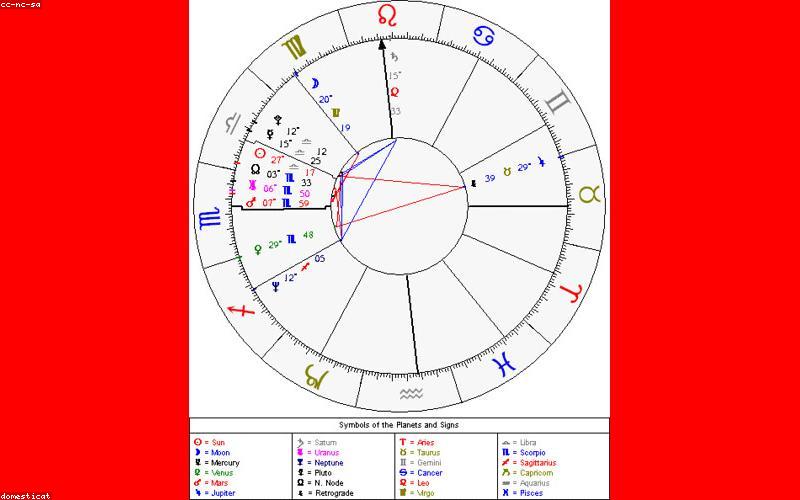
How to Read a Birth Chart: A Beginner's Guide
Your birth chart is a snapshot of the sky at the moment you were born. Learn the basics of reading planets, signs, and houses to unlock your astrological blueprint.

Understanding Your Rising Sign: The Mask You Show the World
Your rising sign shapes first impressions, personal style, and how you navigate social situations. Learn what it means and why it matters as much as your sun sign.
Evidence-Based Self-Discovery Tools: What Actually Works
Self-discovery is a noisy market full of frameworks with very different evidence bases. A careful look at the practices and tools that the research actually supports — and how to think about the popular ones that it doesn't.