
How to Read a Birth Chart: A Beginner's Guide
## What Is a Birth Chart?
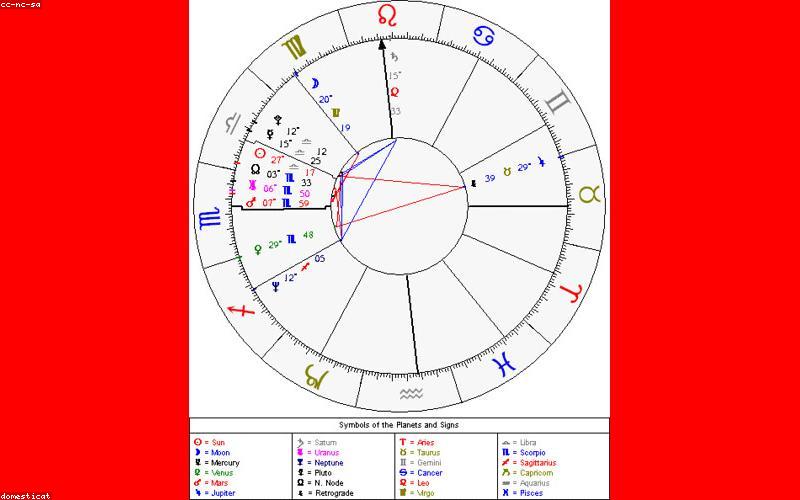
A birth chart — also called a natal chart — is a map of where all the planets were positioned at the exact moment and location of your birth. It looks like a circle divided into twelve sections (houses), with symbols representing planets scattered throughout.
Think of it as your personal cosmic fingerprint. No two birth charts are exactly alike (unless you were born at the same time and place as someone else), which is why astrology can feel so much more personal than just reading your sun sign horoscope.
To generate your birth chart, you need three pieces of information: your date of birth, your exact time of birth (as precise as possible), and your place of birth. Many free websites and apps can calculate your chart instantly with this information.
The Three Key Components
Reading a birth chart involves understanding three layers that work together:
Planets represent different parts of your personality and life force. The Sun is your core identity. The Moon is your emotional nature. Mercury is how you think and communicate. Venus is how you love and what you value. Mars is how you take action and assert yourself. Jupiter is where you expand and find luck. Saturn is where you face challenges and build discipline.
Signs describe how a planet expresses itself. Mars in Aries expresses action boldly and impulsively. Mars in Capricorn expresses action methodically and ambitiously. The sign colors the planet's energy with a particular style.
Houses represent the area of life where a planet operates. A planet in the 7th house relates to partnerships. The same planet in the 10th house relates to career and public image. Houses ground the abstract energy of planets and signs into concrete life domains.
The Twelve Houses
The twelve houses each govern a specific life area:
First House: Self, identity, appearance, first impressions. Second House: Money, possessions, values, self-worth. Third House: Communication, siblings, short trips, learning. Fourth House: Home, family, roots, emotional foundation. Fifth House: Creativity, romance, children, pleasure. Sixth House: Health, daily routines, work, service.
Seventh House: Partnerships, marriage, one-on-one relationships. Eighth House: Transformation, shared resources, intimacy, death and rebirth. Ninth House: Philosophy, higher education, travel, beliefs. Tenth House: Career, public image, authority, legacy. Eleventh House: Friends, groups, hopes, humanitarian causes. Twelfth House: Subconscious, spirituality, hidden matters, solitude.
Reading the Big Three
The simplest way to start reading your chart is with your "Big Three" — Sun, Moon, and Rising (Ascendant).
Your Sun sign (the sign the Sun was in at your birth) represents your core identity, ego, and life purpose. It's the most fundamental expression of who you are.
Your Moon sign (the sign the Moon was in) represents your emotional inner world, instincts, and what you need to feel secure. It's often more accurate for describing your private self.
Your Rising sign (the sign on the cusp of your first house) represents how you appear to others, your physical presence, and your approach to new situations. It's your social mask and the lens through which you experience life.
Together, these three create the foundation of your astrological identity. Someone with a Leo Sun, Pisces Moon, and Capricorn Rising will express themselves very differently than someone with a Leo Sun, Aries Moon, and Gemini Rising — even though they share a sun sign.
Aspects: How Planets Talk to Each Other
Aspects are the geometric angles between planets in your chart. They describe how different parts of your personality interact — harmoniously or with tension.
Conjunctions (0 degrees) blend two planets' energies together intensely. Trines (120 degrees) create easy, flowing connections. Sextiles (60 degrees) offer opportunities that require some effort to activate. Squares (90 degrees) create internal tension that drives growth. Oppositions (180 degrees) create a push-pull dynamic between two life areas.
A chart with many squares might belong to someone who faces frequent challenges but develops tremendous resilience. A chart with many trines might belong to someone with natural talents that flow easily but may lack the friction needed for growth.
Tips for Beginners
Don't try to understand everything at once. Start with your Big Three, then gradually explore where Venus and Mars fall (for relationship insights), where Saturn sits (for understanding your biggest challenges), and where Jupiter lands (for finding your natural luck).
Pay attention to which houses have the most planets — these are the life areas that demand the most attention and energy. An empty house doesn't mean that area is unimportant; it simply means it may flow more easily without requiring as much conscious focus.
Remember that a birth chart is a tool for self-understanding, not a fixed destiny. It shows your natural tendencies and potential, but how you develop and express that potential is always your choice. The chart is the territory; you're still the one walking the path.
Test Your Knowledge!
Think you know this topic? Take a quiz and find out.

What's Your Rising Sign Personality Style?
Your rising sign shapes how you present yourself to the world. Answer these questions about your first impressions, style, and social energy to discover your rising sign vibe.
Which Planet Rules Your Personality?
In astrology, each planet governs different aspects of our nature. Discover which celestial body has the strongest influence on your personality and life path.
Related Articles

Understanding Your Rising Sign: The Mask You Show the World
Your rising sign shapes first impressions, personal style, and how you navigate social situations. Learn what it means and why it matters as much as your sun sign.

Zodiac Compatibility Explained: How the Signs Connect
A fun guide to understanding zodiac compatibility, element pairings, and why some signs naturally click while others challenge each other to grow.
Evidence-Based Self-Discovery Tools: What Actually Works
Self-discovery is a noisy market full of frameworks with very different evidence bases. A careful look at the practices and tools that the research actually supports — and how to think about the popular ones that it doesn't.