
Jung's Archetypes: A Deeper Map of the Psyche

## Beyond the Pop Version
Most people who have heard of archetypes have encountered them in pop psychology — the twelve brand archetypes, the inner child, the shadow self, the dating advice on Instagram about your inner anima. The pop version is not entirely wrong, but it tends to compress Jung's actual ideas into a flat list of personality types, and it leaves out almost everything that made his theory ambitious in the first place.
Carl Gustav Jung, born in Switzerland in 1875, spent most of his career trying to describe a layer of human experience he believed was real but not yet mapped. The map he drew is uneven and in places dated. It is also, taken on its own terms, one of the most original attempts of the twentieth century to take seriously the strange continuities between dreams, myths, religious art, and ordinary mental life.
This article tries to recover the deeper version. What did Jung actually mean by an archetype? Where did the idea come from? And what holds up today?
The Collective Unconscious
The foundation of Jung's archetype theory is the collective unconscious. Freud's unconscious was personal — it contained your forgotten memories, your repressed wishes, the things you could not bring yourself to think about. Jung accepted that this personal unconscious existed but argued that beneath it lay another layer, shared across humanity.
He noticed, in clinical practice, that some of his patients produced symbols, images, and themes that seemed to come from nowhere — material the patient could not have learned from books or family. He noticed too that the same symbols and themes appeared across cultures with no clear path of historical contact. Mandalas appeared in Tibetan Buddhism and in the dreams of Swiss Protestants who had never heard the word. Hero stories had nearly identical structures in Polynesian, West African, and Norse contexts. Mother goddesses, trickster figures, the wise old man, the threshold journey — these recurred everywhere.
The collective unconscious was Jung's hypothesis to explain this convergence. He proposed that humans inherit not specific images but tendencies to produce certain kinds of images — patterns that are activated by life situations and that take culturally specific forms.
These patterning tendencies are what he called archetypes.
What an Archetype Actually Is
Jung was clearer about what archetypes are not than about what they are. They are not specific images. They are not memories. They are not, in the Platonic sense, eternal forms in some metaphysical realm. They are something more like predispositions — formal templates that produce concrete content when stimulated.
A useful analogy comes from the way human beings learn languages. Every healthy infant is born with the capacity to acquire a language, but no infant is born speaking French or Mandarin. The capacity to acquire language is universal; the specific language is cultural. Archetypes, in Jung's view, work the same way. The capacity to recognize and produce hero narratives, mother figures, shadow figures, threshold experiences is universal. The specific shape these take depends on culture, family, and biography.
This is why archetypes can feel both deeply personal and oddly impersonal. The Mother who appears in your dreams may have your actual mother's face, but the role she is playing — the figure of nurture, of origin, of the world that holds you — is older and larger than your particular family.
The Major Archetypes Jung Mapped
Jung identified several major archetypes that recur reliably enough to be named. The Persona is the social mask: the version of yourself you present in public, your role at work, your performed identity. Healthy adults need a persona; problems arise when one identifies with the mask so thoroughly that the inner life beneath it withers.
The Shadow is everything you have rejected or disowned about yourself. Crucially, the Shadow is not just the dark or evil side of personality. It contains repressed virtues as well — the gentleness someone hardened into a fighter has buried, the assertiveness a people-pleaser has refused. Integrating the Shadow means becoming acquainted with what you have refused to be.
The Anima and Animus are Jung's most contested archetypes. He proposed that men carry an unconscious feminine principle (the anima), and women an unconscious masculine principle (the animus), and that integrating this contrasexual figure is essential for psychological wholeness. Contemporary readers tend to read these less literally — as inner figures of the qualities one's culture has gendered the other way and one has therefore had less practice expressing.
The Self is Jung's archetype of wholeness — both the center of the psyche and its totality. The Self is what individuation aims toward: the fully integrated personality in which conscious and unconscious, persona and shadow, ego and Self, have come into working relationship.
Other archetypes Jung discussed include the Hero, the Mother, the Wise Old Man, the Trickster, the Divine Child, the Maiden, and the Wounded Healer. None of these are exhaustive lists. Jung consistently insisted that archetypes are not a fixed taxonomy but a way of describing recurring patterns.
Individuation: The Lifelong Project
For Jung, the goal of psychological development was individuation — the lifelong process of integrating conscious and unconscious into a unified self. Individuation is not self-actualization in the breezy modern sense. It is closer to a slow, often uncomfortable work of becoming acquainted with parts of yourself you would rather not meet.
The process unfolds across stages. First, you encounter your Persona and recognize it as a role rather than your essence. Then you meet the Shadow — the disowned material — and begin the painful work of acknowledging that it is yours. Then, in Jung's account, you confront the contrasexual figure (anima or animus) and integrate that. Finally, you encounter the Self, the deep ordering principle of the psyche, often through symbols of unity such as mandalas, royal couples, divine children, or sacred geometry.
This is meant to take a lifetime. Jung was suspicious of quick spiritual shortcuts. He thought the unconscious had to be approached at its own pace, with respect, and that the rewards were quiet and incremental.
Where Jung Holds Up, and Where He Doesn't
It is worth being honest about which parts of Jung's theory have stood up to scrutiny and which have not. The empirical evidence for a literal collective unconscious — an inherited stratum of the mind that contains specific universal images — is weak. Modern cognitive science can explain the apparent universality of symbols in less mystical ways, including shared cognitive architecture, common developmental experiences, and cultural diffusion.
What does hold up is more modest but still substantial. Recurring narrative and symbolic patterns across cultures are real. Humans do seem to be predisposed to think in certain story shapes. Therapeutic engagement with one's own symbolic life — through dreams, art, journaling, fantasy — does seem to do the kind of psychological work Jung described. And the specific archetypes Jung named (Shadow, Persona, Self) remain useful clinical concepts in depth-oriented therapies.
Like the broader fields of personality theory and depth psychology, Jung's archetype framework is best understood as an interpretive tool for reflection rather than a tested empirical model. It helps people think about their inner lives. It does not give them predictions about the future or substitutes for medical or financial counsel.
Joseph Campbell and the Cultural Afterlife
It is hard to talk about Jung's archetypes without acknowledging the secondary tradition that grew out of them in the second half of the twentieth century. The American comparative mythologist Joseph Campbell, in books such as The Hero with a Thousand Faces (1949) and The Masks of God (1959-1968), drew heavily on Jung's archetype theory to argue that hero myths around the world share a common structural pattern — the monomyth, with its stages of departure, initiation, and return.
Campbell's work was one of the most successful popularizations of any twentieth-century intellectual framework. It influenced a generation of novelists, screenwriters, and game designers — most famously George Lucas, who consulted Campbell during the development of the original Star Wars. The result is that many people who have never read a word of Jung have nonetheless absorbed a Jungian-flavored sense of how stories work, what hero journeys look like, and which character archetypes recur across cultures.
The relationship between Campbell's work and rigorous comparative mythology is complicated; specialists have pointed out that Campbell smoothed over real cultural differences in service of his universalizing thesis. But as a vehicle for Jungian archetypal thinking, Campbell's writing remains one of the more durable cultural artifacts of mid-twentieth-century American intellectual life.
What Working With Archetypes Actually Looks Like
In practice, working with archetypes is less mystical than it sounds. You notice which figures and stories you keep encountering — in dreams, in films that move you, in the kinds of people you fall for, in the kinds of conflicts you keep finding yourself in. You ask what those figures are saying. You consider whether the role you keep playing (the Caregiver, the Hero, the Outsider) is one you have chosen or inherited. You experiment with playing other roles to see what is suppressed.
This is essentially what Jung's analysands did with him in Zürich a hundred years ago, and what people still do in journaling, therapy, and certain kinds of contemplative practice. The frame is symbolic, not predictive. It will not tell you what to invest in, who to date, or whether to take the job. It will, with patience, help you notice the shape of the life you are actually living.
That is not a small thing. The most striking insight in Jung is that the patterns we live out are usually older than we are. Recognizing them does not free us from them entirely, but it does, slowly, give us a little more room to move.
Test Your Knowledge!
Think you know this topic? Take a quiz and find out.

Jungian Archetype Theory Trivia: The Collective Unconscious Explained
How well do you know Carl Jung's map of the psyche? Test your understanding of archetypes, shadow, anima, and the collective unconscious.
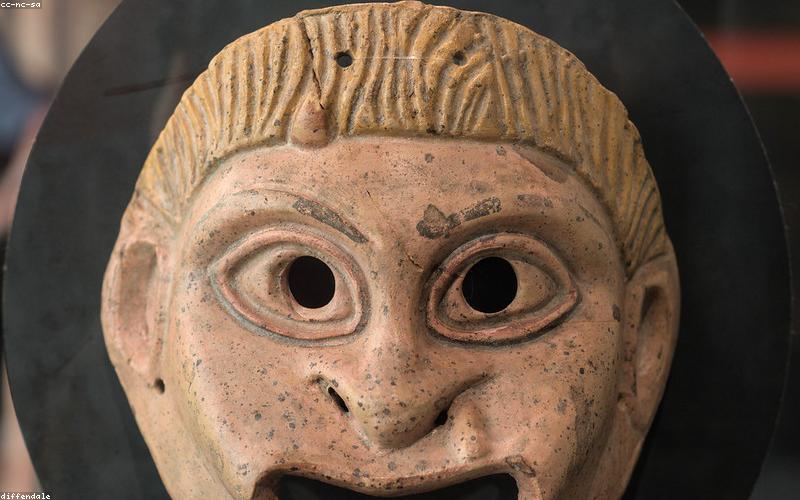
What Is Your Emotional Archetype?
We all process and express emotions differently. Discover your emotional archetype — the pattern that shapes how you feel, connect, and navigate your inner world.
Related Articles
Archetype Theory: Jung's Map of the Psyche Explained
Carl Jung's archetypes are universal patterns that shape human behavior and storytelling. Learn about the key archetypes and how they show up in your personality.

Shadow Work: An Introduction to Your Hidden Self
Shadow work is the practice of exploring the parts of yourself you've hidden or denied. Learn what the shadow is, why it matters, and how to begin this transformative inner work.
Evidence-Based Self-Discovery Tools: What Actually Works
Self-discovery is a noisy market full of frameworks with very different evidence bases. A careful look at the practices and tools that the research actually supports — and how to think about the popular ones that it doesn't.