
Dua Lipa and the Disco Revival That Reset 2020s Pop
## The Album That Outran the Pandemic
When Dua Lipa released Future Nostalgia in late March 2020, the world had effectively just shut down. Tour was canceled. The release was almost pushed. She decided instead to put the record out a week early, on a Friday, when it had become clear there was no other version of this rollout coming. What followed was one of the strangest pop success stories of the decade. An album that had been engineered around dance floors and arena stages got loose in a moment when neither existed, and somehow that turned out to be the perfect circumstance for it. People needed Future Nostalgia precisely because they could not have it.
The album immediately became shorthand for a sound. Future Nostalgia was disco-pop with a slap-bass-and-strings template lifted directly from late-1970s touchstones like Off the Wall and Chic, then accelerated and brightened with contemporary pop drum programming. The opening title track, "Don't Start Now," and "Physical" worked in sequence like a manifesto. Disco was not coming back as a wink. It was coming back as the engine of mainstream pop again, and Dua Lipa was the driver.
The Production Logic of Future Nostalgia
Most of Future Nostalgia was shaped by a tight production circle: Ian Kirkpatrick, Stuart Price, Koz, and Lipa's co-writers including Caroline Ailin, Clarence Coffee Jr., and Sarah Hudson. "Don't Start Now" is essentially built on a bass loop that wouldn't be out of place on a 1979 Chic record, then layered with the kind of conversational lyric ("If you don't wanna see me dancing with somebody") that lets a song deliver a personality before it delivers a melody. "Physical" pushed harder into Olivia Newton-John aerobics-pop and added a mid-song key change that turned a workout into a stadium climax.
The record was unusual for how committed it was to a single sonic world. Most contemporary pop albums hedge their bets across genres in case any single doesn't hit. Future Nostalgia did the opposite. Even "Levitating," which would later become its biggest streaming success after a 2020 remix with DaBaby, sits inside the same nu-disco grid as everything around it. The decision to commit fully to disco was, in retrospect, what made the album feel like a singular statement rather than a playlist.
Studio 2054 and the Pandemic Pivot
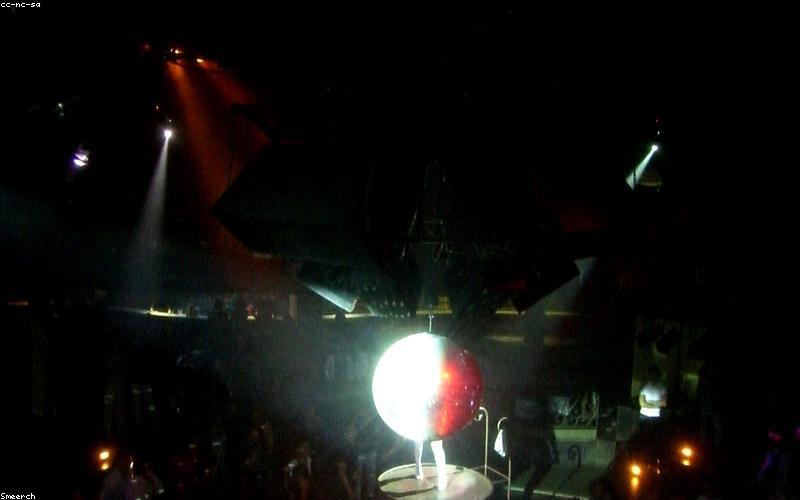
The pandemic version of touring became "Studio 2054," a livestreamed pay-per-view concert film Lipa produced in November 2020. It was sequenced like a vintage variety special with guest appearances from Miley Cyrus, Elton John, Kylie Minogue, and FKA twigs, and it did what almost no other pandemic-era livestream managed to do: it felt like a real show. The set design echoed the album's mirrored-disco-ball aesthetic, and the choreography proved the songs were built to be performed. Studio 2054 reportedly reached more than five million viewers and became one of the templates other artists adopted for their own pandemic broadcasts.
The Future Nostalgia Tour, when it finally happened in 2022, was structurally a stadium-sized translation of Studio 2054. By that point, the album had become so culturally absorbed that the tour functioned more as a victory lap than a debut. The set list barely needed to make a case for anything; the audience was already inside the disco era and ready to sing along.
Why Disco Worked Now
It is worth asking why a disco revival worked in 2020 of all years. One answer is that the early-pandemic moment created an enormous appetite for music that signaled communal joy. Indie-folk and bedroom-pop expanded to fill the introspective demand, but the dance-floor demand needed a voice too, and Future Nostalgia was the most fully realized statement available. The album was already in the can when the pandemic hit, which meant its escapism had no irony attached.
The disco revival was also a structural response to a decade of trap-heavy pop production. The 2010s had drained most of the live-band feel out of mainstream pop in favor of programmed 808s and minimalist hooks. Future Nostalgia restored the kinetic motion of a bass line you could feel in your sternum. Other artists noticed. Within eighteen months, the Weeknd's "Blinding Lights" was reframed as a contemporary disco-adjacent track, Doja Cat's "Say So" turned roller-disco into a TikTok unit, and Lady Gaga's "Rain on Me" with Ariana Grande revived the four-on-the-floor pop chorus. By the time Beyoncé released Renaissance in 2022, the disco-house tradition was unambiguously back at the center of pop.
Radical Optimism and the Question of Follow-Up
Dua Lipa's third studio album, Radical Optimism, arrived in May 2024 after a longer-than-usual gap. It was a different proposition. Co-produced with Kevin Parker of Tame Impala, Danny L Harle, and longtime collaborator Andrew Wyatt, the album swapped the dance-floor commitment of Future Nostalgia for a more psychedelic, Britpop-tinged palette. "Houdini" served as the lead single, and "Training Season" and "Illusion" filled out the era, but the album as a whole was harder to summarize than Future Nostalgia had been.
Some critics read Radical Optimism as a step back; others heard it as a deliberate refusal to repeat the disco formula. The truth is somewhere in between. Radical Optimism is less unified, but it also avoids the trap most blockbuster pop sequels fall into, which is making Future Nostalgia again with worse songs. It establishes that Lipa is willing to take the disco vocabulary she helped re-popularize and let other artists run with it while she explores something else. That kind of restraint is rare in commercial pop and usually pays off across a long career.
What Future Nostalgia Left Behind
Five years on, Future Nostalgia looks like one of the most influential pop albums of the early 2020s. It set the production template that artists from Doja Cat to Tate McRae have referenced, it normalized the idea of pop singles built around live-band instrumentation again, and it gave Dua Lipa a foundational catalog before she had even turned thirty. The album also made the case that a pop record could be a complete aesthetic statement, not just a collection of singles surrounded by filler. That bar is now the one other major pop releases are measured against.
The disco revival itself has, by now, mostly moved on. Disco-house is integrated into the mainstream sound in a way it wasn't in 2019, and the surprise has worn off. But Future Nostalgia remains the proof of concept, the one record everyone agrees did the most to make 2020s pop feel like it was again paying close attention to what made pop fun in the first place. The album is still in heavy rotation, the singles still close arena shows, and the dance-floor sensibility it argued for is now baked into what audiences expect from a modern pop release.
The Long Road From Pop Star to Architect
Dua Lipa's trajectory from her self-titled 2017 debut to Radical Optimism is, in a sense, the story of a pop artist learning to become her own architect. Her first record was a strong if slightly conventional pop debut, lifted by "New Rules" and "IDGAF" but not yet committed to a unified sonic world. Future Nostalgia was the moment that changed. Radical Optimism is the experiment that comes next, and whatever follows will tell us whether the disco gambit was a one-time miracle or the start of a longer artistic logic. Either way, the album that came out the wrong week in March 2020 will be the one pop historians keep returning to.
Test Your Knowledge!
Think you know this topic? Take a quiz and find out.
Dua Lipa Discography Trivia: From Debut to Disco Revival
Test your knowledge of Dua Lipa's career, from her viral debut singles to the chart-topping disco renaissance of Future Nostalgia.
Which Album-Era Aesthetic Suits You?
Disco revival sparkle, bedroom-pop intimacy, vintage country storytelling, or genre-bending experimentalism. Find your album-era aesthetic.
Related Articles
The Pop-Girls Renaissance of 2024-2025
How Sabrina Carpenter, Chappell Roan, Charli XCX, Ariana Grande, and Olivia Rodrigo turned an eighteen-month stretch into a generational pop reset.
The Vinyl and Cassette Resurgence, A Deeper Look
Beyond the headline numbers, what the vinyl and cassette resurgence of the 2020s actually says about how listeners want to live with music.
Indie Sleaze: Why the Late-2000s Aesthetic Came Back, and What It Means
The flash-photography party aesthetic of the late 2000s returned in the 2020s as a music and visual revival, reframed by a generation that never lived it the first time.