
How Digital Communication Is Shaping Modern Couples

## A New Kind of Closeness, and a New Kind of Distance
Couples today share something earlier generations didn't have to navigate: continuous, low-friction digital communication. They text from across town and across the world. They send each other articles in the middle of the workday. They keep up running threads of memes and grocery reminders that, over years, form an intimate private archive. Most of this is good — a kind of ambient presence that used to require physical proximity.
Researchers have begun to ask what else this constant connection is doing. The studies that have emerged over the last decade are not panicked or romantic. They are careful. They identify both the real ways digital communication strengthens couples and the more subtle ways it can quietly erode the very closeness it was supposed to deepen.
Phubbing, Technoference, and Attention
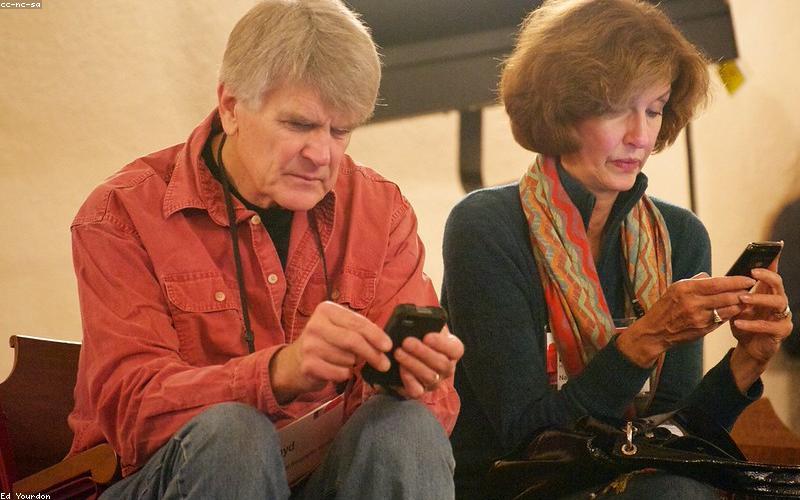
The most-cited concept in this research is *phubbing* — short for phone-snubbing — a term popularized by researchers James Roberts and Meredith David. Phubbing describes the experience of being ignored by someone in favor of their phone. It is small, common, often unintentional. Roberts and David's research, however, has found that perceived phubbing is consistently associated with lower relationship satisfaction and elevated conflict, partly mediated by feelings of disconnection.
A related concept, *technoference*, was developed by researchers including Sarah Coyne and Brandon McDaniel. Technoference describes the everyday intrusions of technology into face-to-face interaction — the phone that interrupts a conversation, the buzz that pulls a parent's attention away from a child's question, the half-attention that becomes the new normal in shared moments. Studies suggest that everyday technoference accumulates, and that the cumulative weight matters for relational closeness even when each individual intrusion seems small.
The findings do not call for banning phones. They call for noticing the cost of constant distraction in shared time and being intentional about when to set the phone aside.
What Texts Are Good At, and Where They Struggle
A clear pattern emerges from research on text-based communication in couples: texts are excellent at certain things and risky at others. They are good for logistics — coordination, plans, small reminders. They are good for low-stakes affection — the heart emoji, the "thinking of you" mid-afternoon, the small bid for attention that lets a partner feel seen during the workday. They are good for ambient presence.
They are less good for emotionally loaded conversations. The missing cues — facial expression, tone, body language — mean that a text intended as gentle can land as cold, and a text intended as light can read as dismissive. Research on text-based conflict consistently finds that text exchanges during emotional moments tend to escalate rather than resolve, because each ambiguous message gives the receiver room to imagine the worst version of what the sender meant.
The recommendation that emerges from this work is straightforward: save emotionally loaded conversations for face-to-face time, or at least for voice or video, where missing cues are restored. The text "Can we talk later?" is a perfectly good way to defer; the four-paragraph text trying to resolve a difficult conflict is, on average, a worse way to handle it.
Researchers have begun to study how attachment styles shape digital communication patterns. Anxious-attachment styles, for example, tend to show more sensitivity to delayed responses. The unanswered text, the read receipt without reply, the long silence between messages can trigger anxiety patterns that the digital medium amplifies.
Avoidant-attachment styles tend to show different patterns: comfortable with longer gaps, sometimes preferring text precisely because it allows more emotional distance. Neither pattern is wrong; both are recognizable echoes of older attachment dynamics playing out in a new medium.
What this research suggests for couples is that talking about digital expectations is worth doing explicitly. How often do we want to be in touch during the day? What does it mean — or not mean — if a text goes unanswered for a few hours? When are we expecting an immediate response, and when are we not? These conversations are unromantic in the way that conversations about scheduling are unromantic, and they are protective in the same way: they prevent small ambiguities from accumulating into resentments.
Long-Distance Couples and the Promise of Digital Tools
The research on long-distance relationships, much of it associated with communication scholar Crystal Jiang, has found something encouraging: long-distance couples can sustain — and sometimes deepen — emotional closeness through digital communication when they use multiple channels and engage in deeper, intentional conversations.
Jiang's work and related research suggest that long-distance couples often communicate more deliberately than co-located couples. Without ambient presence, they cannot rely on the small everyday encounters that build closeness without effort. They have to schedule, plan, and protect time for connection. This conscious effort sometimes produces a richness that surprises both partners.
The implication for co-located couples is interesting: the practices that long-distance couples adopt out of necessity — scheduled video calls, deeper check-ins, deliberate phone-free time together — are also protective for couples who share a home. The medium does not determine closeness. The intentionality does.
Couples therapists trained in Sue Johnson's Emotionally Focused Therapy often reframe complaints about technology in attachment language. A partner saying "you're always on your phone" is rarely making a technical complaint about screen time. They are making an attachment bid: *I need to feel important to you. I need to feel that I am the person in the room.*
Hearing such complaints as bids — rather than as critiques to defend against — changes the conversation. The defensive response ("I'm only on for a minute") usually escalates. The attachment-aware response ("I hear you, I want you to feel important, let me put this down") usually de-escalates. Couples who learn to translate technology complaints into attachment language tend to find these conversations easier over time.
The psychologist Andrea Bonior, who has written widely on relationships in a digital era, makes a point worth holding onto: the goal is not to fight technology or to romanticize an unplugged past. The goal is to live well inside the digital reality that is now the texture of most relationships.
Living well, in Bonior's framing and in the broader clinical literature, usually involves a few practices. Negotiating shared agreements about phones in particular contexts — meals, bedtime, conversations — so that expectations are explicit rather than assumed. Building rituals of focused, screen-free presence into the week. Noticing when digital communication is replacing rather than supplementing face-to-face time. And, when patterns persist that one or both partners can't change alone, seeking a couples therapist who has experience with how technology shapes modern relational dynamics.
A Practice, Not a Verdict
What the research consistently suggests is that digital communication is neither destroying relationships nor automatically improving them. It is a powerful medium that shapes closeness in ways most couples haven't been taught to notice. The couples who do well are not the ones who use phones least; they are the ones who think carefully about how they use them, who agree on practices that work for both partners, and who keep the door open for renegotiation as life changes.
The phone is not the problem. The unconsidered phone often is. And the practice of considering it together — slowly, with curiosity, with care for the relationship that all those texts and voice notes are quietly building or quietly eroding — turns out to be one of the genuinely modern relational skills worth learning.
For couples struggling with chronic technology-related conflict, a couples therapist familiar with these dynamics can help structure the conversations and identify patterns neither partner is seeing. It is not a sign of failure to ask for that help. It is a sign of taking the relationship — and the medium it now lives inside — seriously.
It is worth ending on the more hopeful side of the research. The same digital tools that can erode closeness when used carelessly are also tools that, used well, sustain real connection across distance and across busy days. The text mid-morning that says "thinking of you." The voice note shared between two partners in different time zones. The shared playlist that quietly accumulates over years. The private channel of memes and inside jokes that becomes its own intimate archive.
Researchers who study the positive side of digital communication describe how these small bids for connection, repeated across days and years, build a kind of texture that earlier generations of couples didn't have access to. A partner across town can feel, in some real sense, present throughout the day. A long-distance couple can share more of the small textures of a life than long-distance couples in previous eras could ever have managed.
The same technology that creates phubbing also enables this kind of ambient warmth. The variable is not the technology. The variable is the intention with which it is used, and the willingness to talk about that intention as a couple. Naming what each of you wants from digital communication — more presence, more space, particular agreements about phones in shared time — is itself a relational skill. It is, perhaps, one of the genuinely new skills modern couples have to learn, and one that no previous generation could teach them.
What the research finally suggests is something gentle. The phones are not going away. The texts are not going to stop. The question is whether each couple can build, together, a way of using these tools that strengthens what they are trying to build. The couples who can are not necessarily the most digitally literate. They are the ones who have made the conversation about technology part of the ongoing, patient conversation that any relationship is.
Test Your Knowledge!
Think you know this topic? Take a quiz and find out.
Digital Communication in Couples: The Research
Texts, voice notes, phones on the dinner table. Test your knowledge of what psychologists have learned about how digital communication shapes modern couples.

What's Your Communication Style in Love?
Discover how you naturally communicate in romantic relationships and learn about your unique strengths as a communicator.
Related Articles

Relationship Check-Ins: A Practical Guide Grounded in Research
Couples therapists consistently recommend small regular check-ins as one of the highest-leverage relationship practices. Here's what they look like, why they work, and how to begin.
Repair Rituals: What Couples Research Says About Coming Back Together
Every couple fights. What separates strong relationships is not the absence of conflict but the presence of repair. Here's what psychology has learned about coming back together.

Loneliness in the Modern World: What the Research Reveals
Researchers have begun to take loneliness as seriously as they take other health risks. Here's what the studies show — and how a more connected life is built one small relationship at a time.